Sweet Migration - Metal Chaos to Virtual Ease

A Sweet History
Al Wefag, is a leading confectionery and snacking giant in Saudi Arabia. In 1968, from a modest start in Jeddah as a traditional wholesale shop, Al Wefag has grown to over 10 branches spread across the Kingdom of Saudi Arabia alone and with a global footprint across 20 countries.
Today, they’re a powerhouse of delectable treats, keeping shelves stocked with a wide range of Fast-Moving Consumer Goods (FMCG). Their dedication to quality and innovation has transformed them into a household name across Saudi Arabia.
Al Wefag ran a number of Oracle Database instances as well as some Microsoft based applications. The databases and the applications had access to a Storage Area Network (SAN) where all the data resided. Al Wefag continue to handle the Microsoft based system and applications, they also have a relationship with Oracle who handles the Oracle databases.
The infrastructure needed to be updated as part of the technology upgrade cycle. Telenet Solutions Limited (Telenet), who are headquartered in Nairobi, are a leading computer vendor, authorised technology partner operating in the Africa region as well as in the Middle East where Al Wefag is based. They were approached to undertake the infrastructure upgrade as part of a wider infrastructure team.
Al Wefag has an enterprise IT environment that primarily runs Microsoft based solutions that are used across the company, for departments such as sales and marketing. The data for all these solutions is housed on the Oracle Database platform which stored on a Storage Area Network (SAN).
Telenet audited Al Wefag’s onsite infrastructure as well as resource use and then planned and designed a technology solution that would be cost effective.
The Bitter Challenges
During the design process, a number of issues were noted. Oracle databases are essential to Al Wefag’s operations, but the traditional physical server setup presented a major hurdle. Oracle Database Licensing model required that one pays for the total number of cores on a server or cluster (physical or virtual), regardless of actual usage. This became a financial pain point that needed a rethink, because in essence, Al Wefag was essentially already paying a premium for unused cores due to the Oracle Database licensing structure.
Another issue was that Al Wefag IT department mostly manage a Microsoft environment. For Oracle to provide support for the Oracle databases, the underlying Operating System (OS) would have to be Oracle Linux. This is where Telenet reached out to Red Afro Limited (RA) to provide Linux operating system environment support.
A path to explore virtualisation was mooted with the end goal being migration to a fully virtualised environment, to host the Oracle databases and other internal applications. This was then discussed and approved at Al Wefag together with Telenet before implementation.
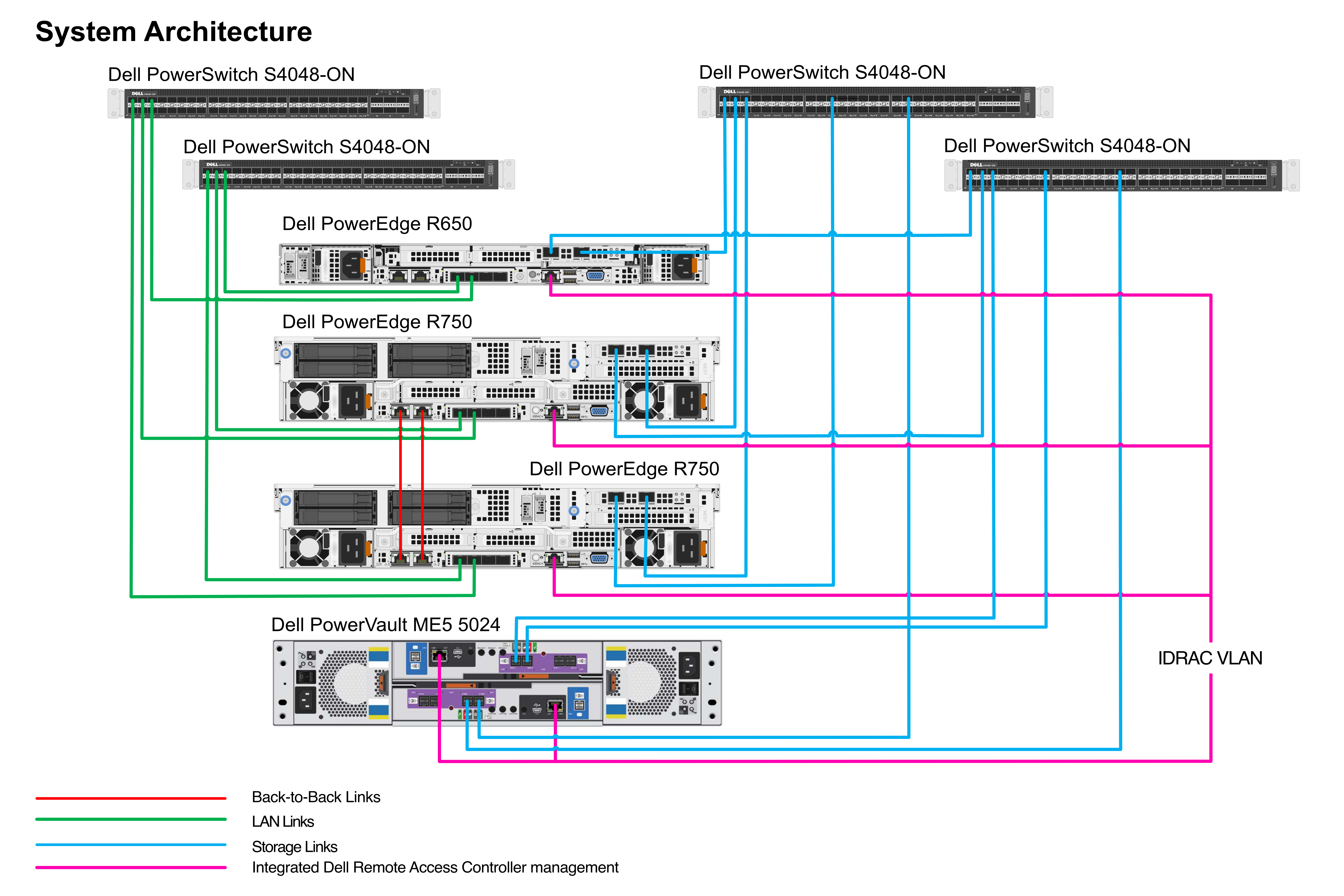
Al Wefag IT department had initially procured two Dell PowerEdge R750 servers that were set up as a cluster to provide a Kernel-based Virtual Machine (KVM) platform to house the Oracle databases. It was also noted that the Al Wefag’s internal applications needed to be run separately. The Dell PowerEdge R650 was procured to run the internal applications.
Below is the infrastructure design that Telenet proposed to handle the KVM platform.
The Sweet Wins
Once the KVM implementation began, the first major win came in the form of Oracle Linux being a Red Hat Enterprise Linux (RHEL) based Operating System which meant that virtualisation support was a first class citizen. Oracle Linux has a virtualisation solution based on oVirt, aptly named Oracle Linux Virtualisation Manager (OLVM) which provides a range of features such as virtualisation certifications, with a big focus on (KVM) for integration and performance, ease of use and deployment as well a management dashboard.
Our second win came in the form of the opportunity to design the KVM platform from the ground up without encumbrances of tip-toeing around legacy software. However, a new challenge came up during testing of the OLVM on the Oracle Linux OS on host servers. It was an edge case that required a particular Linux kernel version to be locked to the host servers.
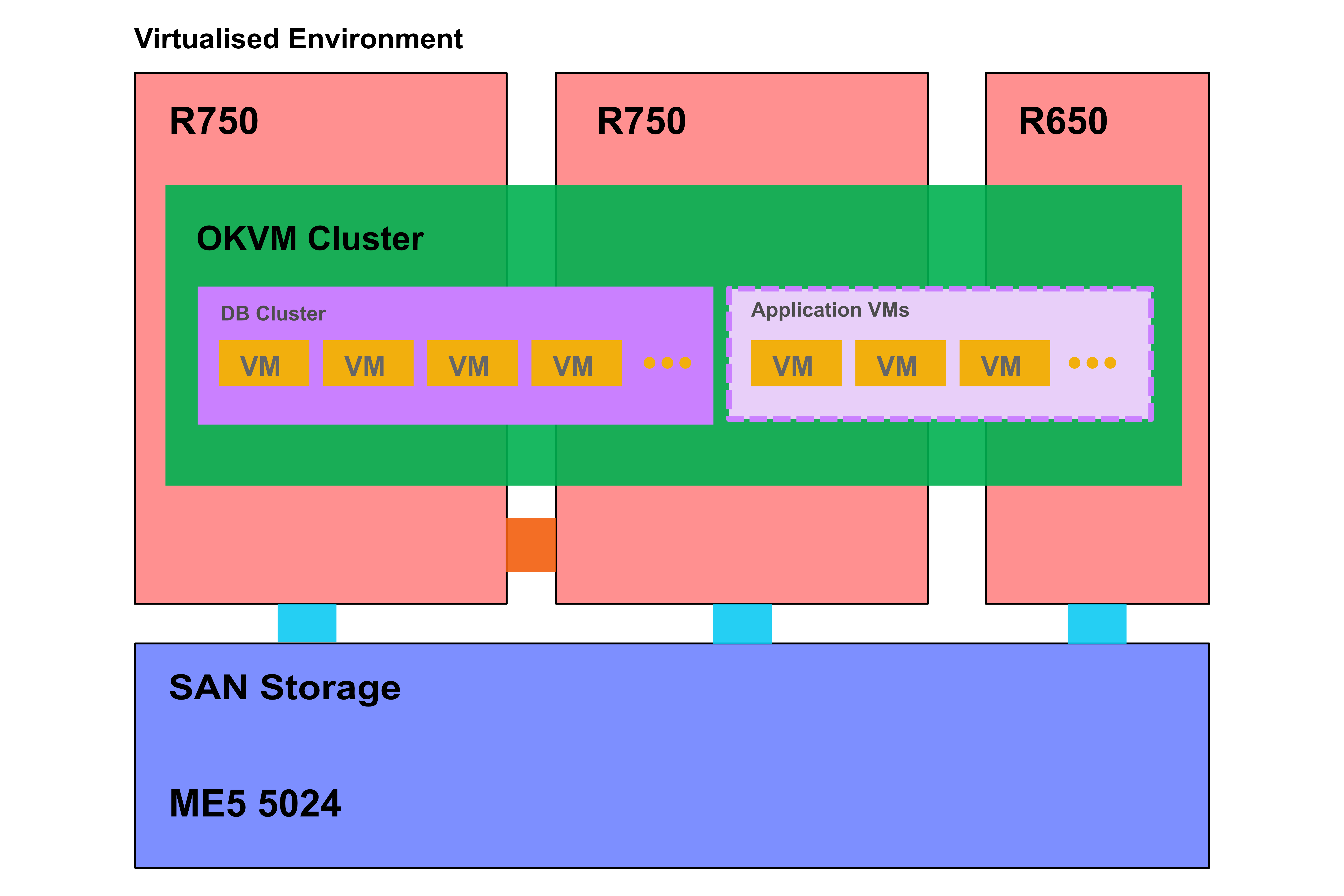
The third win was a High-Availability infrastructure cluster brought about by combining the three servers; the two R750s which were meant to run the Oracle databases and the R650 server that was meant to run the internal applications. These were linked together through the high-speed switches providing all the hardware resources to a singe-pane OLVM environment.
Here is representation of what the solution looked like:
Tasty Savings
During the design process, the virtualisation option was initially triggered by the need to manage licensing costs that were based on the server cpu cores. Each of the procured Dell R750 server had two, eight-core Intel Xeon cpus. The two servers collectively had 32 cores.
The number of cores that the Oracle databases were then to use was a fraction of the 32 cores that would be available on the R750s. Despite the addition of a third server which allowed the creation of a High-Availability cluster with even more cores available, the Al Wefag system administrator was still able to provide virtual machines that matched the needs of the Oracle databases.
At the end, it emerged as a fairly desirable solution in that it provided a scalable platform that not only allowed Al Wefag to precisely allocate processing power (cores) to each VM running an Oracle database but also opened up other opportunities like consolidation of internal software into smaller more composable virtual machines. These outcomes resulted in fairly significant cost savings.
Conclusion
It is important to mention the unexpected benefits of virtualisation that extended far beyond just managing licensing costs. Below are some of them.
- Improved Resource Utilisation: Virtualisation allowed Al Wefag to consolidate some of their physical servers into fewer but more powerful servers. This freed up valuable physical space and improved overall resource utilisation.
- Enhanced Manageability: OLVM provided a centralised platform for managing and provisioning virtual machines, not tied down to any particular Linux distribution or Windows Operating System or version for that matter. It also provided a safe way to do testing on composable VMs before fully deploying to production.
- Greater Flexibility and Scalability: The virtualised environment offered Al Wefag the ability to easily scale their database resources up or down as needed. This newfound flexibility ensured their IT infrastructure could adapt to changing business demands, just like their product lines need to adapt to seasonal trends.
All in all, meticulous planning and exceptional execution allowed the project to be a massive success, with an extremely happy client to boot.